
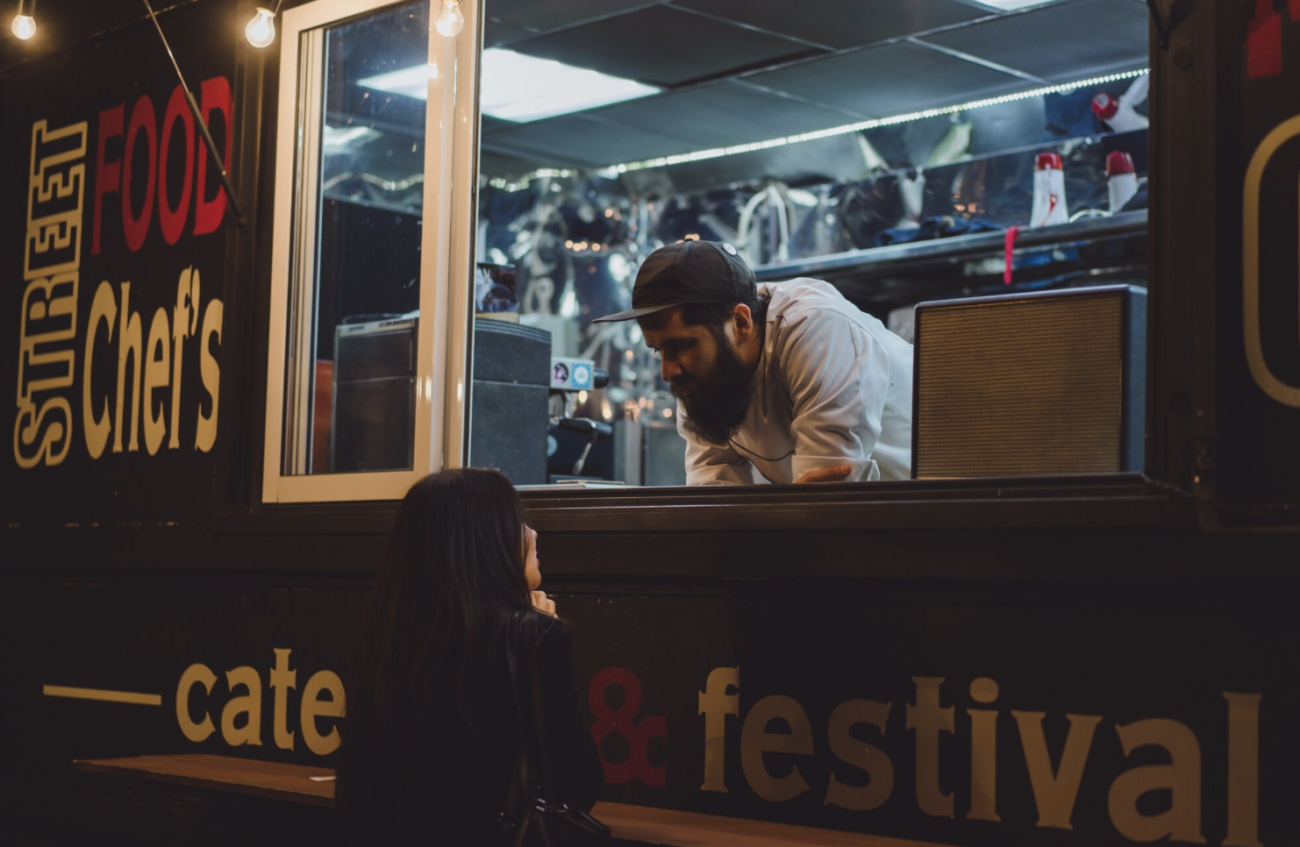

Food trucks sit at the intersection of two very different insurance worlds: a working commercial kitchen and a vehicle that’s driven daily, often parked in high-traffic public locations. That combination means food truck owners typically need a broader mix of coverage than either a standalone restaurant or a standalone commercial vehicle owner.
Why Food Trucks Face Layered Risk
A food truck isn’t just a mobile restaurant — it’s a vehicle, a kitchen, and a retail storefront all in one asset. That creates overlapping exposure:
- Vehicle risk: accidents while driving between locations, parking incidents, and damage from the truck itself
- Kitchen risk: fire, burns, and equipment breakdown from cooking in a confined space
- Public-facing retail risk: customer injuries at the service window, foodborne illness claims, and property damage at event venues
Essential Coverage for Food Trucks
Commercial auto insurance Covers the truck itself while driving, including liability if you’re at fault in an accident. This is different from a policy covering the truck only while parked and operating — many food truck owners need both driving and “in-operation” coverage confirmed separately.
General liability insurance Covers customer injuries and property damage at your service window or event location — a common requirement for securing permits and event bookings.
Commercial property/inland marine coverage Covers the kitchen equipment, generators, and inventory inside the truck against fire, theft, and equipment breakdown — critical given how much specialized equipment is packed into a small mobile space.
Workers’ compensation Required in most states once you have employees, relevant here given the physical demands and burn/cut risk of cooking in a tight, moving kitchen environment.
Liquor liability (if applicable) Needed if your truck serves alcohol at events, in addition to general liability.
The Permit and Event Booking Factor
Most cities require proof of general liability insurance before issuing a food truck permit, and event organizers almost universally require a certificate of insurance — often with the event or venue listed as an “additional insured” — before allowing you to set up. Without current proof of coverage, you can be turned away from a booking on the spot, so keeping your certificate of insurance easily accessible is a practical necessity, not just a formality.
Average Cost
Pricing depends on the value of your truck and equipment, whether you have employees, and how frequently you operate at public events versus a fixed location:
- Small, owner-operated truck with basic equipment: lower end of the cost range
- Established truck with employees and higher-value equipment: moderate range
- Larger operation with multiple trucks or frequent large-scale event bookings: higher end, particularly with liquor liability added
Factors That Increase Your Premium
- Operating in multiple cities or states, which can add licensing and coverage complexity
- Frequent participation in large public events, which typically requires higher liability limits
- Deep fryers and open-flame cooking, which carry higher fire risk than simpler prep setups
- Prior claims, especially vehicle accidents or fire-related incidents
How to Reduce Your Costs
- Install fire suppression systems specific to mobile kitchens — many carriers offer discounts for documented systems
- Maintain the truck’s vehicle maintenance records, since mechanical issues can factor into both auto and equipment claims
- Bundle commercial auto and general liability where a carrier offers a combined mobile-food-business package
- Keep your certificate of insurance updated and ready to send quickly, since delays can cost you event bookings
Bottom Line
Food truck insurance isn’t a single policy you can borrow from a restaurant template or a commercial auto template alone — it genuinely needs both, plus coverage for the equipment packed inside. Confirming your policy covers the truck both while driving and while parked and serving is one of the most commonly missed details in this industry.
